History. A tiny nation with the distinction of being the “cradle of civilization,” Armenia is bursting with historical magnificence and is one of the world’s oldest civilizations, dating back to more than 3,000 years.
Population. There are an estimated three million people living in Armenia. Ethnic Christian Armenians constitute more than 90 percent of the republic’s population with Russians, Ukrainians, Yezidis, Georgians, Greeks and Assyrians making up the rest.
Religion. Armenia was the first nation to adopt Christianity as its official religion in 301 A.D. The influence of religion on Armenian culture has been enormous, with Christian iconography playing an important role in Armenia’s art and architecture. The study of churches and monasteries, and the khatchkars and illuminated manuscripts of the church, reveal the devotion of Armenian artists to celebrate their Christian culture. Today, the Armenian Apostolic Church, also known as the Armenian Orthodox Church, is the largest church in the country.
Diaspora. Today, more Armenians live outside of Armenia than in the country. This is largely due to the 1915 Armenian Genocide as well as large-scale emigrations from Armenia that took place after a tragic earthquake in the country in 1988 and the collapse of the Soviet Union in 1991.
Language. The official language of Armenia is Armenian, a unique tongue with its own branch on the tree of Indo-European languages and no close-living related vernacular. It is a distinct language with its own 38-letter alphabet invented by Mesrop Mashtots in order to translate the Bible to Armenian. Still, many in Armenia speak English, particularly in the country’s capital of Yerevan. Volunteer Physicians taking part in the AECP’s Medical Mission will almost always be with English speakers so there won’t be any language barrier issues if physicians do not speak Armenian.
Hospitality. Armenians are extremely proud of their rich heritage and cultural traditions and celebrate often with a level of hospitality unseen by most Westerners. Visitors are welcomed with open arms and usually with a celebration as many AECP Volunteer Physicians will tell you. A warm and generous people, Armenians are known for their hospitality. This hospitality especially embraces the table, where elaborate feasts can last for several hours.
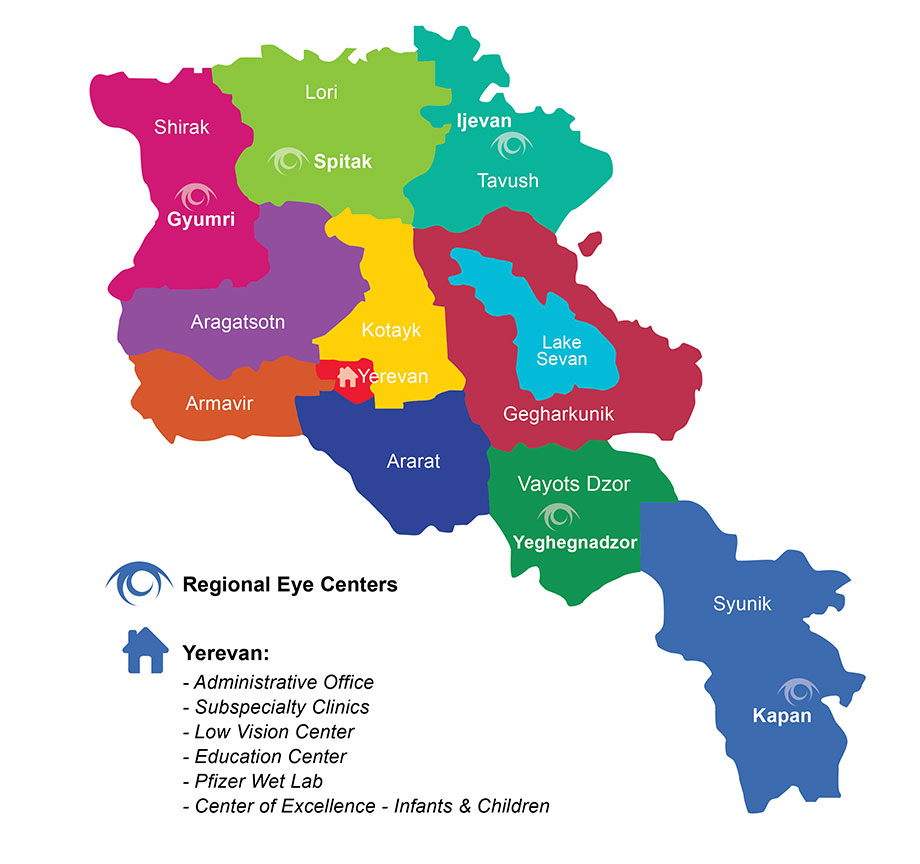
Geography. Armenia is located in the Southern Caucasus. The first of the former Soviet Republics to declare its independence after the fall of the Soviet Union, it is also the smallest. Slightly larger than the state of Maryland, Armenia has an area of 30,000 square kilometers. Contemporary Armenia is a fraction of the size of ancient Armenia. The country is landlocked by Georgia on the north, Azerbaijan on the east, Iran on the south, and Turkey on the west.
Climate. Because of its high elevation and inland location, most of Armenia has a continental climate, despite it being latitudinally equivalent to Mediterranean countries like Spain, Italy and Greece. The summers are very hot and the winters moderately cold, especially on the Ararat plain. Fall is usually the best season in terms of weather to travel to Armenia.
Culture. The artistic expressions of Armenian culture are at the very heart of its identity. Whatever the medium, these artistic outlets tell the unique story of Armenian history and contemporary Armenian culture. It is through their architecture and sculpture, painting and pottery, music and dance, clothing and jewelry, literature and language, and textiles and weaving that one is able to gain an understanding of the Armenian people and the influences that have shaped their identity.
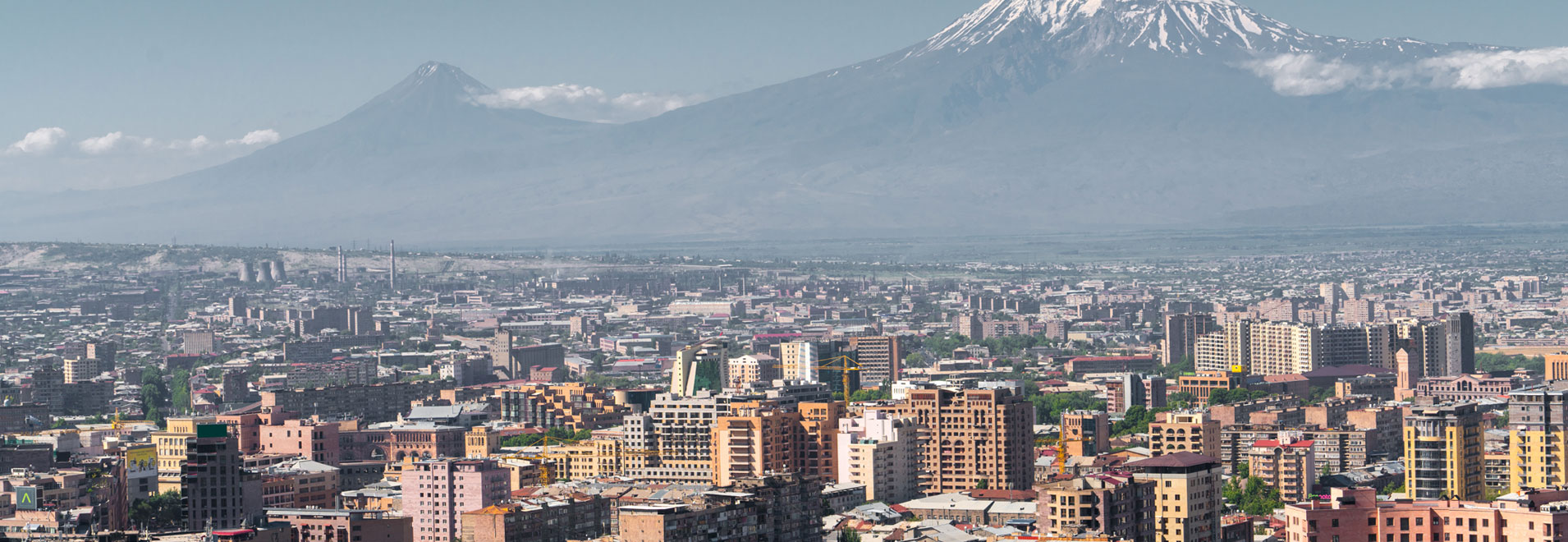
Capital. Yerevan is the capital city of Armenia. It is home to one million residents, which is about one-third of the country’s population. Yerevan is located on the large, dry Ararat plain, about 1,500 miles above sea level. Yerevan, which is 29 years older than Rome, is steeped in history with magnificent examples of art and architecture. Most of its buildings are covered with a rosy stone, called “toof,” that is quarried in Armenia, and the city is rich in monuments. Yerevan is beautiful any season of the year and is the most popular of Armenia’s tourist destinations.
Food & Restaurants. With an abundance of fresh fruits and vegetables as well as livestock throughout the country, agriculture is big business in Armenia. All of the food in the restaurants is local, ordered daily and comes from the Ararat Valley. There are no food safety issues in Armenia, which adopted a strategy and action plan to bring its food safety system into line with EU standards in 2011. Restaurants — known for their hospitality and unique cuisine — will primarily serve Armenian food. As well, bottled water for drinking is inexpensive and widely available throughout the country.
Safety. Armenia is a very safe country and Yerevan is extremely safe when walking at night. Though there have been issues along the border with Azerbaijan and in Artsakh, the Republic of Armenia has largely been unaffected. AECP’s Founder & President, Dr. Roger Ohanesian, has been traveling to Armenia one to two times a year for 30 years and has not experienced a single incident.
Cash. The national currency in Armenia is Armenian Dram. Exchanging cash from U.S. Dollars to Armenian Dram is extremely convenient; there are exchange stations all over the capital city and it is a pretty straightforward process. There are also several ATMs across the country where you can withdraw money in U.S. dollars. As well, more and more restaurants and other establishments in Armenia accept credit cards. Still, it’s worthwhile to have a small supply of Armenian currency if needed, especially if interested in buying some souvenirs from street vendors.
Adaptors & Outlet Converters. The electrical voltage in Armenia is 220 Volts. You will need adaptors and/or outlet converters for your electrical devices, which should be purchased before you arrive in Armenia. These are the same adapters (for the same voltage) you would encounter in western Europe.
Visas. You do not need a visa to travel to Armenia.